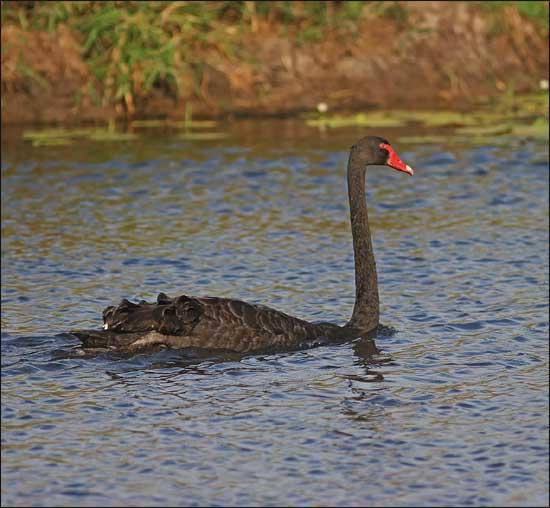
These are found throughout Australia with the exception of Cape York Peninsula and the drier interior. Outside the breeding season they travel quite large distances, in high rainfall years emigration occurs from the south west and south east into the interior, with a reverse migration to these heartlands in drier years.
They prefer larger salt, brackish or fresh waterways and permanent wetlands, including ornamental lakes, flooded pastures and tidal mud flats; these must have 40 m or more of clear water for taking off.
Food consists of algae and weeds which the bird obtains by plunging its long neck into water up to 1 m deep, occasionally birds will graze on land but they are clumsy walkers.
Males and females look the same and pair for life, the nest is a large mound of reeds, grasses and weeds about 1m.in diameter and up to 1m. high and built in shallow water or on islands. Both parents share the care of the nest which is reused every year, being restored or rebuilt as needed. The chicks are covered in grey down and are able to swim and feed themselves as soon as they hatch.